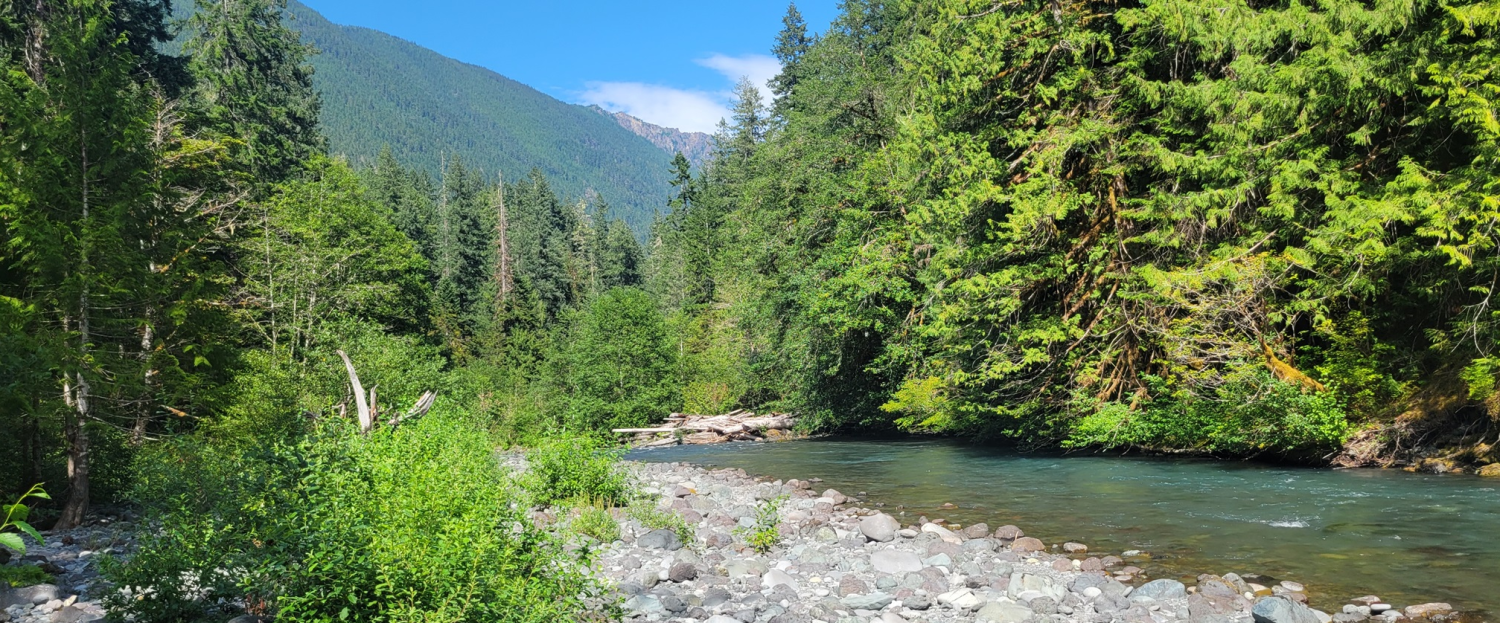

There is a reason stepping into the woods feels like a deep exhale.
That response is not nostalgia or a mindset trick. Instead, it is biology at work.
Modern life places constant demands on the human body. Noise, speed, artificial light, crowded spaces, and endless digital input keep our systems running without rest. Over time, this creates stress that the body was never designed to manage continuously.
Because of this, many people feel worn down without understanding why. The explanation lies in how we evolved.
Our Bodies Were Shaped by a Different Environment
Evolutionary anthropologist Colin Shaw studies how environments influence human health. His work builds on a well established concept in evolutionary biology known as evolutionary mismatch.
For most of human history, people lived in nature rich environments. Stress arrived in short bursts, followed by recovery. When danger passed, the body returned to baseline.
Modern environments removed that recovery phase.
According to a 2025 peer reviewed paper in Biological Reviews, Shaw and his colleague Daniel P. Longman explain that industrial environments place demands on the body that conflict with how human biology evolved. While our physiology remains largely unchanged, our surroundings have shifted dramatically.
As a result, this mismatch helps explain rising levels of anxiety, chronic stress, inflammation, and other health challenges seen across modern societies.
What Happens to the Body in Nature
Importantly, this idea is supported by real world research.
Scientists at the University of Zurich studied how different environments affect human physiology. Participants spent time in forest settings and in heavily urban areas. Researchers measured stress hormones, blood pressure, immune markers, mood, and attention before and after.
The results followed a clear pattern.
Time spent in forest environments lowered blood pressure, reduced cortisol levels, supported immune function, and improved psychological well being. In contrast, time spent in dense urban environments increased stress markers and mental fatigue.
Notably, participants were not asked to meditate or change their behavior. They simply walked, sat, and observed.
In this context, nature acted as regulation rather than entertainment.
Why Cities Keep the Stress Response Active
The human stress response evolved to handle short term danger. Once a threat passed, the body recovered.
Today, modern life rarely allows that recovery to occur.
Traffic noise, artificial lighting, notifications, crowded spaces, and constant deadlines keep the nervous system on alert. Research published in Physiological Reviews shows that chronic activation of stress pathways disrupts hormones, weakens immune regulation, and increases inflammation.
In addition, neuroscience research published in Nature shows that people living in urban environments exhibit stronger stress responses in the brain compared to those raised in rural settings.
This is not a personal resilience problem.
Rather, it is an environmental load problem.
Nature Is Not a Luxury. It Is Health Infrastructure.
Because of these findings, public health organizations are beginning to shift their perspective.
The World Health Organization now recognizes access to green space as a factor in physical and mental health. Regular exposure to nature is linked to lower cardiovascular risk, improved mood, and better stress regulation.
Consequently, parks, trails, forests, and green corridors are increasingly viewed as essential infrastructure. They are not optional extras. Instead, they function as biological support systems.
What This Means for Everyday Life
At Outside In, this research reinforces a simple truth.
Growth does not always come from doing more. Often, it comes from restoring what modern life removes.
Regular exposure to natural environments helps rebalance systems overloaded by stimulation and speed. Fortunately, this does not require dramatic lifestyle changes.
Small moments still matter.
A walk under trees.
Time outside without a phone.
Allowing the nervous system to experience quiet again.
Viewed this way, these moments are not indulgences. They are maintenance.
Step Outside. Grow Within.
Ultimately, this science is not about rejecting modern life. Instead, it is about designing a life that works with human biology rather than against it.
When we step outside, we are not escaping responsibility. Instead, we are restoring capacity.
As clarity improves, stress softens.
When stress softens, energy returns.
Nature reminds the body what safe feels like.
That is where growth begins.
Scientific References
Evolutionary Mismatch and Human Health
Shaw, C. N., and Longman, D. P. Environmental mismatch and human health. Biological Reviews.
https://onlinelibrary.wiley.com/journal/1469185x
Nature Exposure and Stress Reduction
Twohig Bennett, C., and Jones, A. The health benefits of the great outdoors. Environmental Research.
https://www.sciencedirect.com/science/article/pii/S0013935118303321
Forest Bathing and Immune Function
Li, Q. Effect of forest bathing trips on human immune function. Environmental Health and Preventive Medicine.
https://link.springer.com/article/10.1007/s12199-008-0068-3
Chronic Stress and Inflammation
McEwen, B. S. Physiology and neurobiology of stress and adaptation. Physiological Reviews.
https://journals.physiology.org/doi/full/10.1152/physrev.00041.2006
Urban Living and Stress Processing
Lederbogen, F., et al. City living and urban upbringing affect neural social stress processing. Nature.
https://www.nature.com/articles/nature10190
Green Space and Public Health
World Health Organization. Urban green spaces and health.
https://www.who.int/publications/i/item/WHO-EURO-2016-3352-43150-60249